
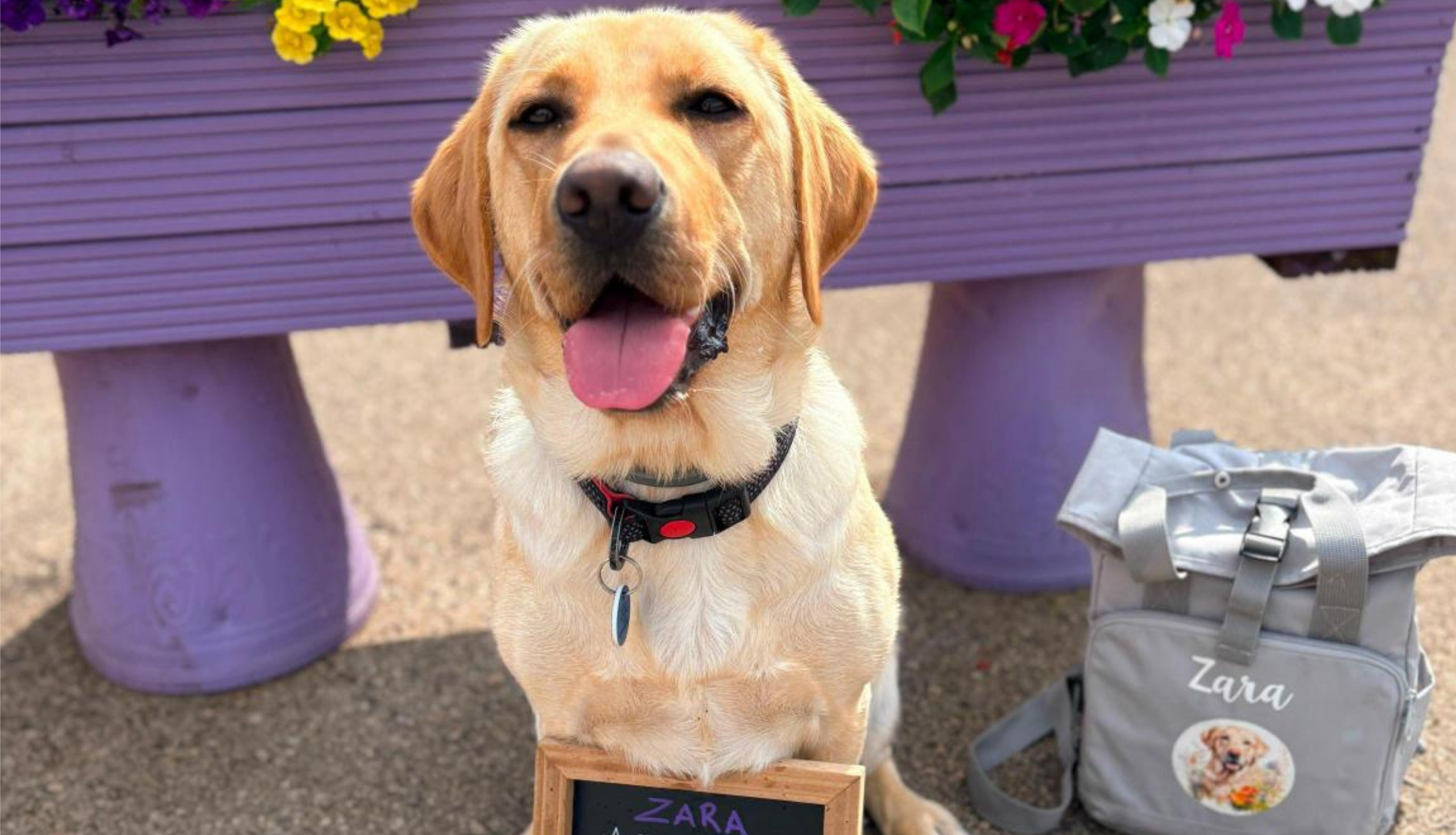
While many children are starting a new school year this September, a new class of four-legged students are beginning lessons of their own.
Labrador Zara and her canine classmates have recently graduated from puppy training and begun assistance dog training at our National Training Centre in Osgathorpe, where they’ll be practising new skills, exploring new environments, and taking another step towards their future partnerships.
This move marks the start of more formal assistance dog training. Building on everything they learned with their Puppy Training Volunteers, they start developing the practical skills they’ll one day use to support a disabled person in everyday life. Think of it as moving up to ‘big school’, just with more treats and tail wags.
First lessons
At our National Training Centre, assistance dogs in training learn how to transform the touch, tug, and retrieve skills they first developed as young puppies into practical everyday tasks.
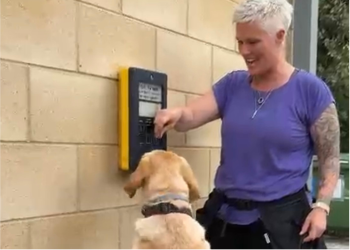
That might mean retrieving dropped items, opening doors, or pressing buttons.
Recently, Zara has been practising how to use her touch skills to press a pedestrian crossing button and a button that opens a door, whilst others have been enjoying walks around the paddock, developing the loose-lead walking skills that are vital as an assistance dog.
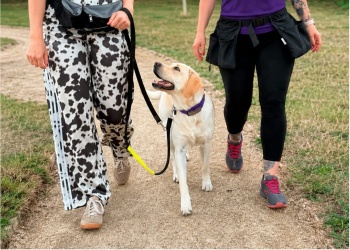
As their confidence grows, our dogs learn to walk calmly alongside a wheelchair of other mobility aids. They also experience a variety of real-world environments, from local shops and town centres to busy public spaces.
Throughout their training, our dogs spend time in a variety of settings across the National Training Centre, from training arenas and outdoor spaces to kitchens adapted bungalow environments. Experiencing different sights, sounds, surfaces, and situations helps them build the confidence and resilience they’ll need as they progress through their training.
“One of the most rewarding parts of my role is watching a dog’s confidence grow as they start putting their learning into practice. One day they’re working out how to press a button, the next they’re showing off as though they’ve been doing it their whole life. Every new skill, experience, and small success helps prepare them for the life-changing partnership that lies ahead.”
These practical tasks often start with something simple. Just as Zara, has been learning to respond to the “touch” cue. With time, patience, and plenty of practice, that cue can develop into a practical skill that could one day support greater independence in everyday life.
Every lesson is carefully designed to help dogs learn behaviours and tasks they could one day use to support a future partner. But that doesn’t mean learning can’t be fun too.
Just like children, every dog has their own favourite lessons. Some enjoy mastering new skills and earning a well-deserved treat, while others love exploring new places and discovering the world around them. In fact, if you asked one of our assistance dogs in training, treats like sprats and broccoli would probably be their favourite subject.
What might look like a simple game or training exercise today could one day help open doors, both literally and figuratively, giving a future partner greater confidence and independence.
Homework matters too
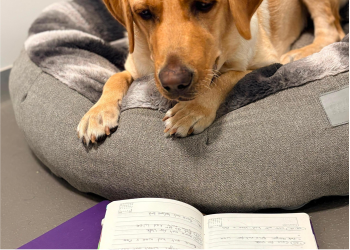
Of course, the school bell doesn’t really ring at the end of the day. Some of the most important learning happens away from the training centre, during the ordinary moments that make up everyday life.
That’s where our Assistance Dog Training Volunteers play such a valuable role.
For around four months, these incredible volunteers’ welcome a dog into their home, providing a safe, loving, and stable environment where newly learned skills can be practised and confidence can continue to grow.
While dogs attend training sessions at the National Training Centre at least three times a week, it’s the experiences in between that help bring those lessons to life.
Whether it’s a walk around the neighbourhood, a trip in a car, a coffee stop, shopping trip, school run, or simply settling down at home after a busy day, every experience helps shape a future assistance dog.
The moments may seem ordinary. But for a dog in training, they’re all part of the lesson.
“It’s amazing to watch a dog’s confidence grow through the little things. A walk, a trip to the shops, or even just spending time together at home can all become learning opportunities. Knowing you’re helping them on their journey towards partnership makes those everyday moments feel really special.”
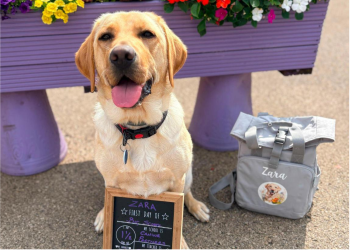
No dog graduates alone
Every assistance dog follows their own path towards partnership.
Along the way, there are new experiences, new challenges, and plenty of achievements worth celebrating. There are also muddy paws, the occasional creative interpretation of the lesson plan, and plenty of learning for the humans along the way too.
Behind every future partnership is a community of people helping a dog reach their potential. Trainers, volunteers, and the dogs themselves all play their part. From lessons at the National Training Centre to everyday adventures at home, every experience helps build the confidence and resilience future assistance dogs need to thrive. It takes a village to raise an assistance dog.
Could you help support a future partnership?
We’re currently looking for more Assistance Dog Training Volunteers to provide a loving home for a dog in training and help them put their learning into practice.
If you live within 30 minutes of our National Training Centre in Osgathorpe or regularly travel nearby and could incorporate training centre visits into your existing routine, you could play a vital role in a dog’s journey towards partnership.