
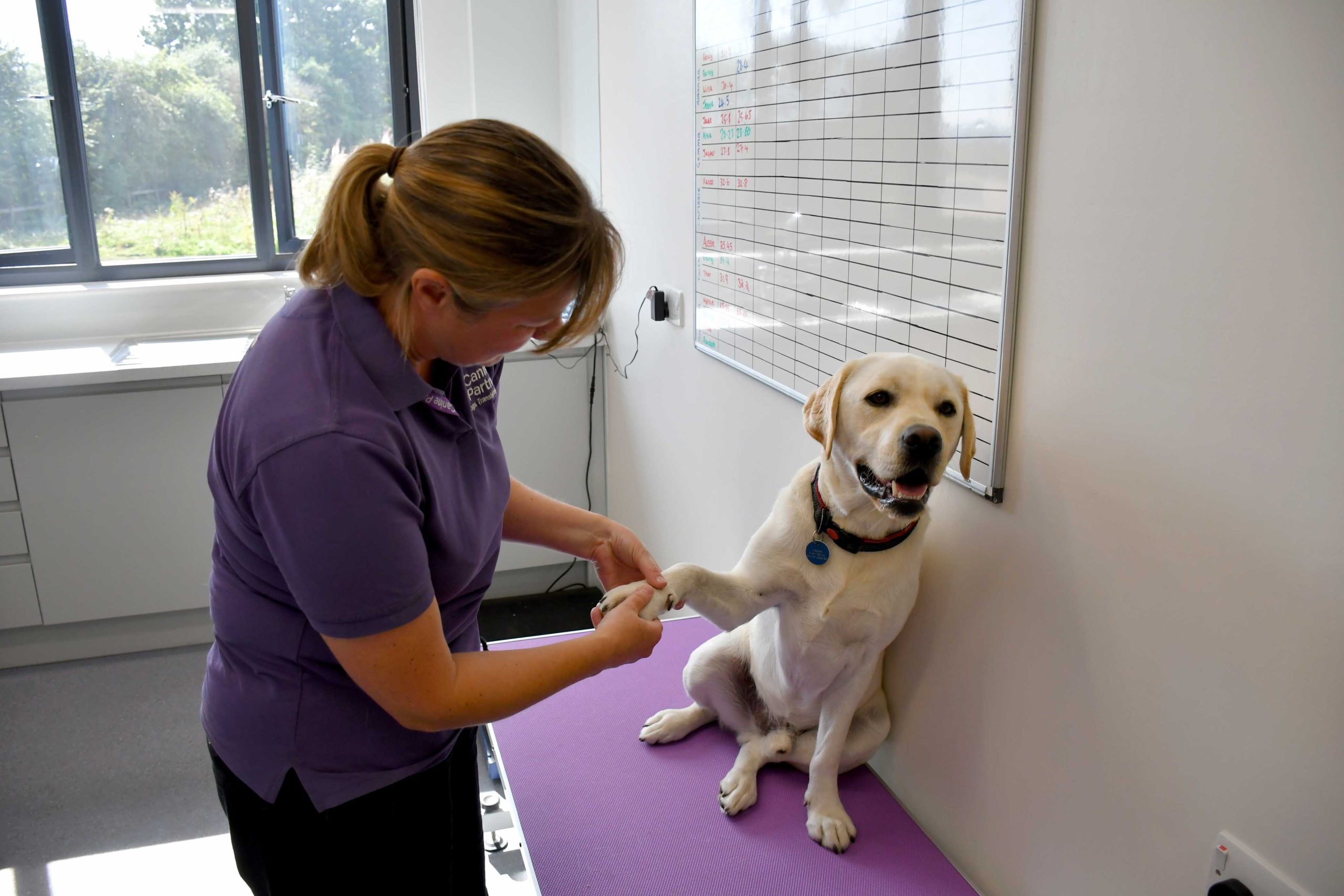
Handling is part of every dog’s life. From playtime and grooming to health checks and vet visits, it’s something they experience regularly and a normal part of caring for them.
But how we handle our dogs can shape how they feel about these experiences for the rest of their lives.
What is consent-based handling?
Consent-based handling (also known as cooperative care) is all about giving dogs a voice – so they feel safe, confident and understood. Rather than expecting dogs to simply tolerate handling, we give them the chance to take part willingly.
It’s the approach we use with our puppies, dogs in training, and assistance dogs. It’s something you can easily start doing with your own dog at home.
What does ‘giving your dog a voice’ mean?
Dogs can’t say ‘yes’ or ‘no’ in words, but they are always communicating through their behaviour.
Signs a dog is comfortable might include:
- a relaxed body
- choosing to stay close
- offering a paw
Signs they may be unsure might include:
- pulling away
- freezing
- turning their head
Consent-based handling is about noticing these signals and responding to them. By recognising early signs, we can prevent stress from building and help dogs stay confident.
Why it matters for your dog
When dogs feel listened to, they feel safer. That sense of safety builds trust, and trust makes everyday care easier.
Dogs are more relaxed during grooming, more cooperative at the vet, and less likely to become fearful or stressed. It can also help prevent small worries from turning into bigger challenges over time.

How we build these skills at Canine Partners
We start this early in a puppy’s journey with a simple mat setup. The mat (a blanket or bed) gives the puppy a clear place where they can choose to settle.
A key part of this is giving the puppy the option to move away and choose whether to return. If they come back, they’re choosing to continue. If they don’t, we take a step back.
Over time, the puppy learns that the mat is a safe, rewarding place to be. From there, we gradually introduce gentle handling in small steps.
As puppies grow, we build on these foundations. Skills like a chin rest help create calm, steady positions for handling. A dog might rest their chin on a hand, lap or surface while their ears are checked or they are groomed.
Here are a few simple ways to try consent-based handling with your dog:
- Give them a choice: If your dog moves away when you try to handle them, pause. Give them space and see if they choose to come back.
- Start small: Keep handling brief and gentle, just a few seconds at a time to begin with.
- Watch their body language: Look for signs they’re comfortable (relaxed posture, staying close) or unsure (tension, hesitation, moving away).
- Build positive associations: When your dog stays relaxed and chooses to take part, acknowledge it with calm praise or a reward. The aim isn’t to persuade them to stay, but to build a positive association.
- Go at their pace: Every dog is different. What feels easy for one may feel overwhelming for another.
When things don’t go to plan
In situations like emergency or urgent veterinary visits, the priority is helping your dog to cope. Treatment is necessary for their health and welfare, and opting out isn’t always a safe or viable option. In these moments, it’s entirely appropriate to use supportive strategies such as treats, licking mats, or familiar comforts to reduce stress and help the animal through an essential experience.
A better way to care
Consent-based handling is about more than a training technique. It reflects the relationship between person and dog.
By giving dogs a voice and responding to what they’re telling us, we help them feel safe, confident and understood – creating a two-way relationship built on trust
At Canine Partners, this bond is at the heart of every partnership we create, and it’s something every dog deserves.